DWG-01 · PLUMBING OPS PLATFORM · REV 2025.6 SCALE 1:1 · UNITS: TRUCK-ROLLS
Custom Plumbing Software

Software drawn to your shop's spec, not the median trade's.

For multi-branch plumbing operators who've outgrown ServiceTitan or Housecall Pro, where emergency dispatch, parts-on-truck, and multi-license, multi-permit work don't fit a packaged product.

6-10 wk
bounded feature
to production
4-8
engineers,
US-reviewed
100%
code owned
at hand-off
FIG. A, DISPATCH FLOW (P&ID)LIVE
INTAKE · CALL burst line · Riverside SEVERITY VALVE DISPATCH MANIFOLD match: proximity × license × ETA PARTS / TRUCK PEX ×48 · OK wax ×3 · LOW TRUCK 04 ETA 18 min licensed ✓ PERMIT GATE Mesa · sewage on file ✓ re-route
active path emergency re-route conditional / permit
01 / VALVE
Failure points

Where packaged FSM software fails plumbing.

Off-the-shelf tools assume a scheduled, single-license, parts-from-the-warehouse job. Plumbing breaks all three, these are the four pressure points where multi-branch operators get stuck.

Emergency-firstFP-01

Your day is dispatch triage, not a tidy schedule.

A burst line doesn't wait for the next open slot. You're constantly re-sequencing by severity, proximity, and who's licensed, and packaged tools that assume a booked calendar fight you on every reassignment.

Parts marginFP-02

The truck is your warehouse, and your margin leak.

Whether the tech has the right fitting decides whether the job closes today or rolls to a second truck-roll tomorrow. If parts-on-truck lives in someone's head, you over-stock every van or eat return trips.

ComplianceFP-03

Licenses and permits gate who can do what, where.

Multi-license techs, multi-jurisdiction permits, and inspection sign-offs are real constraints on dispatch, not metadata. Software that can't reason about them sends the wrong tech or ships work that fails inspection.

FragmentationFP-04

Dispatch, billing, and warranty live in three systems.

Work orders in one tool, invoicing in QuickBooks, warranty and permit records in a third, none agreeing. Every dispute or callback becomes a manual hunt, and the back office absorbs the cost.

Solved by software built around how your shop runs: emergency-first dispatch, parts-on-truck intelligence, license- and permit-aware scheduling, one connected back office.

02 / SCOPE
Bill of materials

What we build into a plumbing platform.

REF · 02.1

Emergency-first dispatch

A board that re-sequences by severity, proximity, and license, built to reassign on the fly, not defend a fixed calendar.

REF · 02.2

Parts-on-truck intelligence

Per-truck inventory tracked in real time, restock flags before a van runs dry, and first-trip-fix rates you can actually see.

REF · 02.3

License & permit-aware scheduling

Multi-license techs and multi-jurisdiction permits modeled as real dispatch constraints, with inspection sign-offs tracked to the job.

REF · 02.4

Technician field interface

Mobile-first and offline-capable, work orders, parts, photos, and customer sign-off that sync when the signal comes back.

REF · 02.5

QuickBooks & warranty integration

One-way QuickBooks sync with retries and logging, plus warranty and permit records tied to the work order, not a third system.

REF · 02.6

Owned software, not rented

You own the code, the architecture, and the pipeline. No per-seat escalation, no vendor lock-in, no roadmap you don't control.

03 / SEQUENCE
Build sequence

How a build actually goes.

1Week 1

Scoping.

We ride along with your dispatchers and best techs. Map the emergency flow, the parts reality, and the license and permit constraints, then set the feature scope.

2Weeks 2 to N

Build.

A small senior team, 4 to 8 engineers, US review on every PR, weekly demos. You see the dispatch board work against real jobs, not a status report.

3Cutover

Ship + hand-off.

Ship behind a flag, pilot one branch or dispatcher, roll wider when ready. You own the codebase at the end, most operators keep us for phase 2.

Typical timing

A bounded feature (emergency dispatch, a parts module, a permit tracker) ships to production in 6 to 10 weeks. A full operator platform (dispatch + technician interface + back-office) runs 4 to 8 months from kickoff. We ship incrementally; you don't wait months for the first visible thing.

Engagement proof

Plumbing, shipped inside a multi-trade platform.

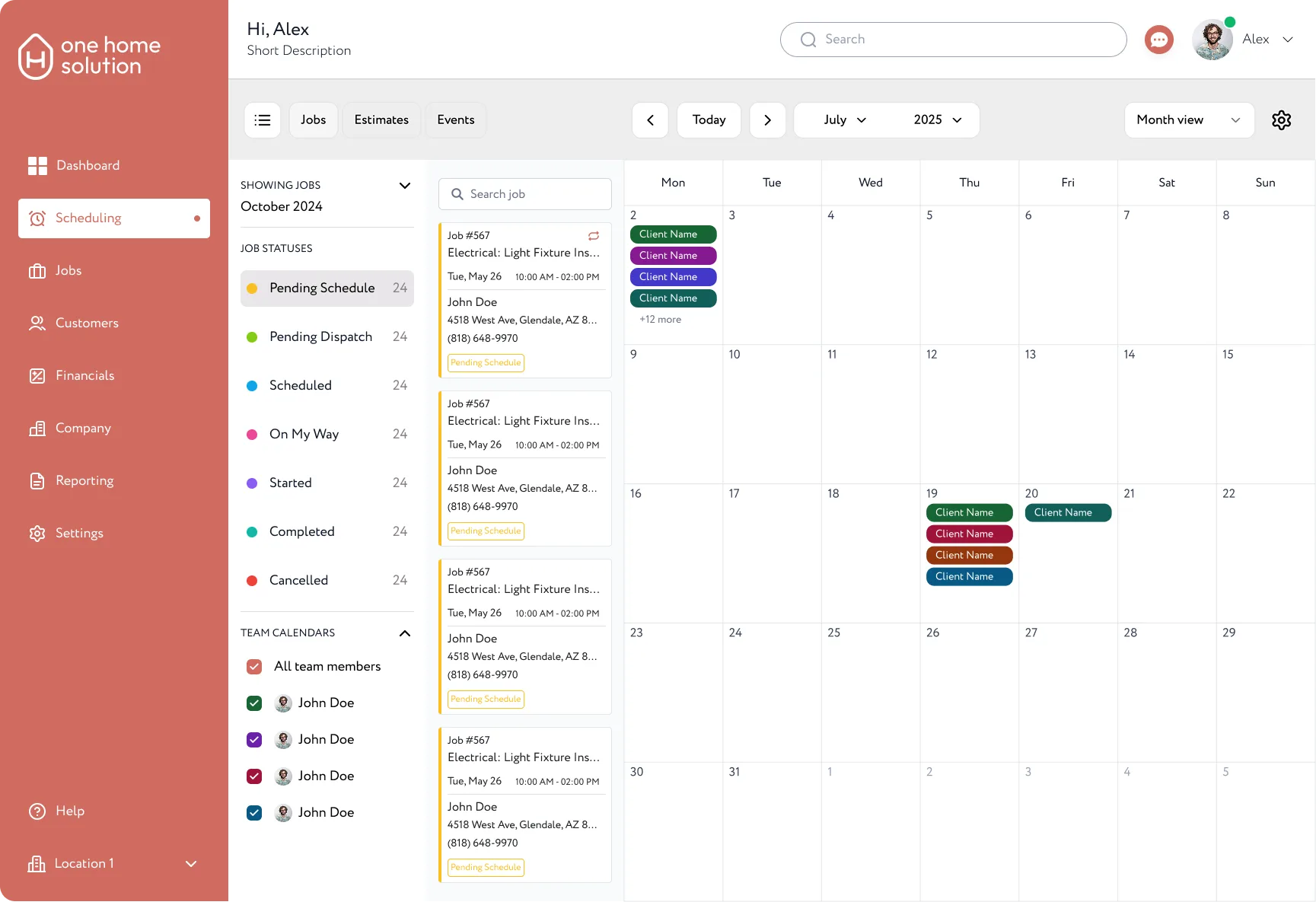
One Home Solution back-office dispatch and scheduling dashboard
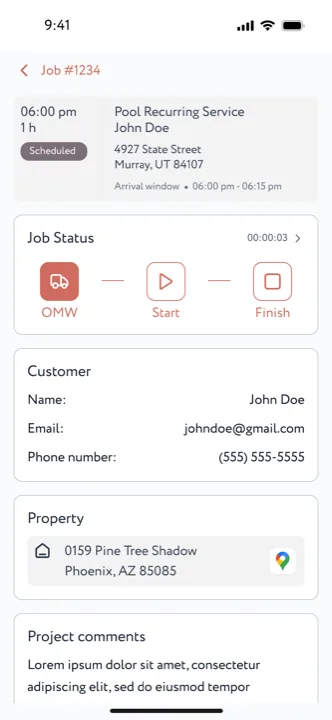
One Home Solution technician field app showing a scheduled job

One Home Solution

Across Utah, Orange County, and Arizona, One Home Solution runs HVAC, plumbing, electrical, and general repairs on one platform. We shipped a client app, a technician field interface, a back-office dashboard, and an AI pricing engine, with plumbing's emergency dispatch and parts reality handled as a first-class trade, not a checkbox bolted onto an HVAC tool.

TRADES / PLATFORM4
MARKETS3
SURFACES SHIPPED4
CODE OWNERSHIP100%
Read the full build story
Answers

Frequently asked questions.

Packaged FSM SaaS works well for the operator-shape it was designed for, usually a single-trade, single-location shop on a booked calendar. Plumbing at multi-branch scale breaks those assumptions: emergency-first dispatch, parts-on-truck economics, and multi-license, multi-permit work. Custom is worth it when configuring around those limits costs more than a build, when renewal pricing climbs make you want to own the code, or when the constraint you need modeled simply isn't in the packaged product.

We model the board as a live triage queue, not a fixed calendar. Jobs re-sequence by severity, proximity, and which techs are licensed, and reassignment is a first-class action rather than something the tool resists. The dispatch spine comes from real field-ops work (the ArcGIS routing and offline-first mobile we built for Ocore), so it's a proven foundation, not a from-scratch experiment.

Yes, per-truck inventory is core scope. We track parts at the van level in real time, flag restocks before a truck runs dry, and surface first-trip-fix rates so you can see where return trips leak margin. The goal is to stop choosing between over-stocking every van and eating second truck-rolls.

Yes. Multi-license techs and multi-jurisdiction permits are modeled as real dispatch constraints, the board won't send an unlicensed tech to work that requires the license, and permits and inspection sign-offs are tracked to the job rather than a separate system. How strict the enforcement is gets scoped with your compliance lead in Week 1.

You do. Code, architecture, deployment pipeline, and documentation are all yours at the end, with no vendor lock-in. We can stay on for support and extension, most operators keep us for phase 2, but the IP is yours from day one.

Cross-reference

Where this practice connects.

Get started

Want to see if a custom build makes sense for your shop?

A 15-minute operator-to-engineer call. No deck, no pitch. You tell us where the dispatch board and the parts reality hurt most; we tell you whether a custom build is the right move, and if it isn't, we'll say so.

Book a 15-min call
From Prompt to Production · Drawn to your spec, owned by your team