

Ocore
Modernizing a Field-Operations Platform at Scale: How Motomtech Rebuilt Ocore for Dispatch, Geospatial, and Offline-Mobile
About Ocore
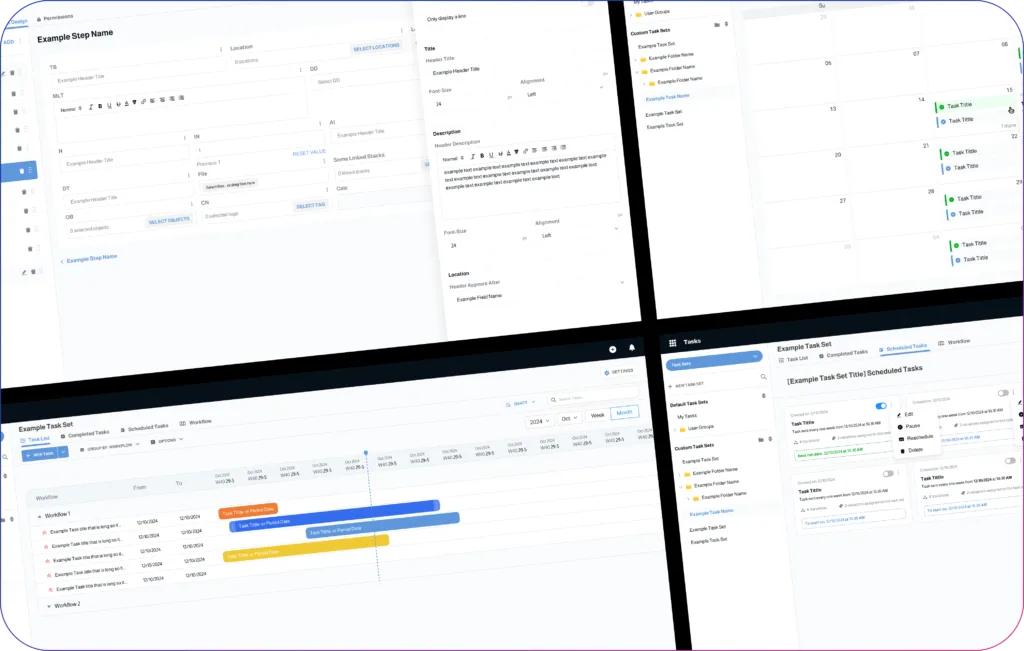
Ocore is a field-operations management platform trusted by organizations to coordinate dispatched teams, manage recurring maintenance work, and track field activity across geographically distributed sites. With more than eight years of continuous development, Ocore had become a foundational system of record for its operators — most notably APCO, whose President Eric Smith leads one of the largest deployments — supporting daily workflows across task sequencing, scheduled maintenance, geospatial oversight, and mobile field execution. By the time Motomtech came in, the platform had the scale and the user base but was starting to show its age. Industry buyers were increasingly comparing Ocore to modern FSM platforms with cleaner interfaces, faster response times under load, and first-class offline mobile support. The business case was clear: preserve the institutional knowledge encoded in eight years of field-operations workflows, but rebuild the product experience to meet the bar that a 2020s field-operations buyer now takes for granted.
Industry
Field Service Management
Service
Dedicated Product Team
What We Did
Web and Mobile Application Development
Custom Team
4 Full-Time Equivalent (Developers, Product Manager, Product Owner, Designer)
Results
Since its launch, the Ocore platform has delivered tangible benefits like
Refreshed UX Lift
70% improvement in user satisfaction following the launch of the redesigned, role-based interface. Field technicians, dispatchers, and administrators each moved through their day with fewer clicks and cleaner flows.
Backend Performance Gains
60% boost in backend performance through architecture modernization — cleaner data flows, smart caching, and refactored service boundaries that kept response times steady as operator volumes scaled.
Offline-First Mobile
2× faster load times alongside full offline access in the rebuilt mobile app — technicians could work a full day in low-connectivity environments with clean reconciliation when they returned to coverage.
New Platform Capabilities
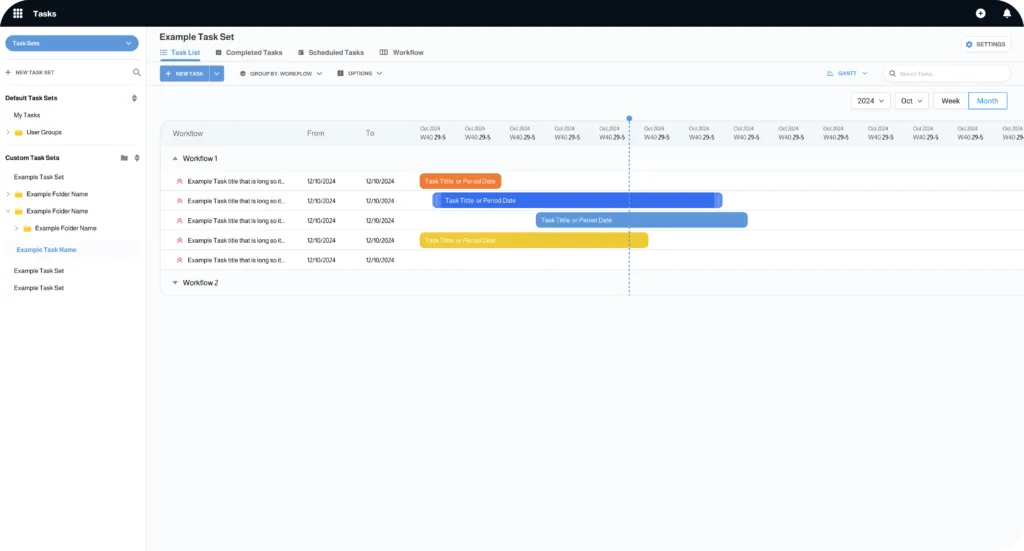
3 new high-impact modules introduced — task sequences, scheduled maintenance, and ArcGIS-powered geospatial mapping — giving Ocore the capability footprint of a modern FSM platform without fragmenting the institutional workflows operators had built up over years.
Challenge
Ocore's core business — coordinating field work at scale — was still sound. The product-market fit had been proven across years of real operator usage. What was weighing the platform down was the architecture and UX accreted during that same long run. On the user-experience side, the interface had drifted across years of incremental additions. Field operators, dispatchers, and administrators each needed to move quickly, but the flow had become cluttered: too many clicks to complete a recurring action, screens optimized for one role that were now being used by three, and mobile views that had been bolted onto a web-first design rather than built for the realities of technicians in the field. On the architecture side, the Meteor + Node + React stack had served the platform well for years, but the original data-flow patterns were now creating performance bottlenecks as operator volumes scaled. Features that should have felt instant — like pulling up a technician's route for the day or generating a recurring-maintenance schedule — were getting slower as data volumes grew. And the roadmap kept adding pressure: operators wanted geospatial mapping tied to work orders, smarter task automation, and a mobile app that actually worked when a technician drove out of cell coverage. The engineering reality was that the internal team couldn't simultaneously keep the lights on, ship the roadmap, and re-platform the UI and the data layer. Ocore needed a partner who could lead the modernization as a dedicated product team — not a staff-augmentation rotation, not a rewrite-from-zero vendor — while the existing system kept serving its established operator base without interruption.
Solution
Motomtech engaged as a Dedicated Product Team embedded in Ocore's product and engineering function — four full-time roles (developers, product manager, product owner, and designer) operating as a self-contained delivery unit rather than as contractors on an internal roadmap. The engagement was structured around three parallel tracks — design, architecture, and new capabilities — run in sequence but planned together so that the redesign set the target for the re-architecture, and the re-architecture set the foundation for the new feature work. That sequencing mattered: the modernization had to preserve Ocore's operator-facing semantics (how field workers, dispatchers, and administrators already thought about tasks, routes, and schedules) while swapping out the visual layer, the performance layer, and the feature surface beneath them. Motomtech's work on Ocore is one of the build stories in our custom field service management software practice — where we build field-ops platforms for multi-market operators and FSM product vendors.
Phase 1
Product Redesign and Role-Based UX
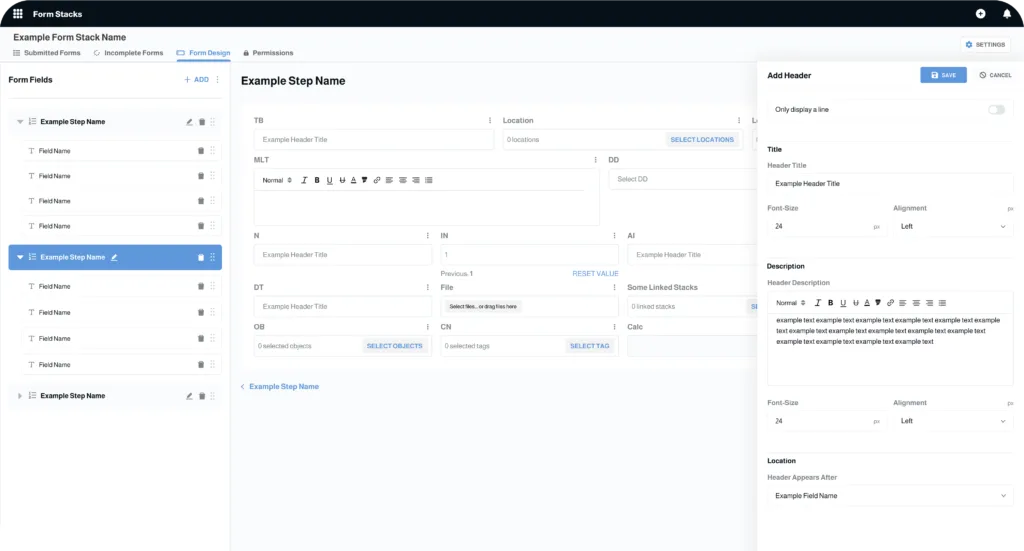
The engagement began with structured discovery — stakeholder interviews with Ocore's product team, usability reviews with real operators, and review of the years of feature creep that had accumulated in the existing interface. The team then redesigned the full UI in Figma, with simplification and role-based flows as the guiding principles. The design work was deliberate about role separation. A field technician on a mobile device needs a fundamentally different flow than a dispatcher at a desk or an administrator pulling weekly reports, and the redesign routed each role through a flow optimized for their actual work — fewer clicks for high-frequency actions, cleaner navigation for low-frequency ones, and consistent patterns so that an operator moving between a web dashboard and a mobile device would not have to relearn the system. The redesign also established responsive behavior as a first-class constraint: every screen had to work across desktop, tablet, and phone without feeling like an afterthought.
Phase 2
Architecture Modernization for Performance and Offline
With the target UX defined, the team re-architected the backend and frontend codebase to support it. The Meteor + Node + React stack was retained — rewriting from scratch would have discarded years of embedded field-operations logic — but the patterns around it were modernized. Backend services were refactored for modularity and cleaner data flows. Smart caching was introduced where operator data was being re-fetched more aggressively than the user experience required. Unnecessary frontend re-renders were tracked down and eliminated. And critically, the mobile runtime was rebuilt around an offline-first model: field technicians could complete their workday — open work orders, capture field data, update statuses — without depending on cell coverage, with the system reconciling cleanly when connectivity returned. For a platform whose users spend a meaningful fraction of their workday in low-connectivity environments, offline-first wasn't a nice-to-have; it was the difference between the mobile app getting used and the mobile app getting ignored.
Phase 3
Feature Expansion — Geospatial, Sequenced Work, Scheduled Maintenance
With the redesign live and the architecture modernized, the team shipped a series of high-impact features that let Ocore compete with the newer generation of FSM platforms on capability, not just on operator-workflow fidelity. Task Templates and Sequences introduced automated, multi-step work patterns — so that a recurring inspection or a standard install procedure could be defined once and re-used across technicians and sites. Scheduled Maintenance tracking gave operators first-class management of recurring work without having to manually recreate tasks every cycle. ArcGIS integration added geospatial mapping directly into the work-order view, so dispatchers and field leads could see site distribution, route coverage, and asset geography without leaving the platform. Smart Menus with Quick Actions reduced clicks on high-frequency operator workflows. Internal Communication Threads gave field teams a first-party in-app alternative to the SMS-and-email sprawl that typically builds up around dispatched work. And the rebuilt mobile app — offline-first by design — consolidated the technician's day into a single, reliable interface. Each of these capabilities was designed to slot into the existing role-based UX from Phase 1, rather than to live as its own separate surface. The result was a platform that had been substantially modernized without fragmenting the operator experience.
Technology Stack
To ensure a high-performance, scalable, and secure solution, the Ocore platform was built using:
Backend
Meteor Node
Frontend
React Blaze HTML
Testimonial
“The refresh of the Ocore platform with Motomtech has been transformational. The system now feels modern, scalable, and far easier to use across our teams. From better workflows to powerful new tools like ArcGIS, we’ve seen real gains in operational speed and team engagement.”
Eric Smith,
President, APCO