

Agreed
From Idea to Execution: How Motomtech Built Agreed into a Powerful Decision-Making Platform
About Agreed
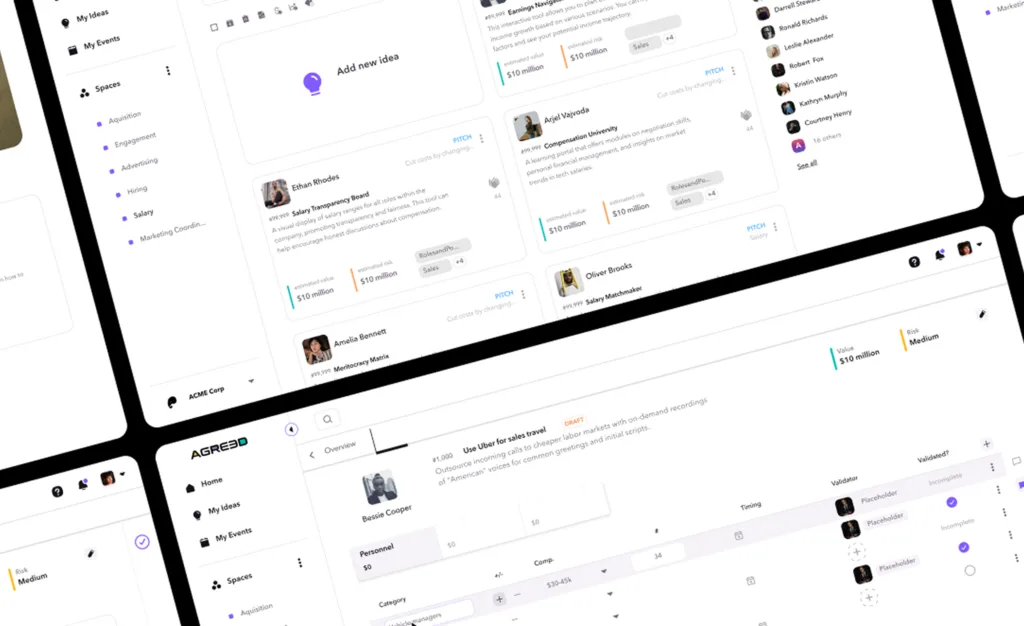
Agreed is a decision-making platform that helps teams turn promising ideas into business cases they can act on. It takes the messy organizational decisions, the ones tangled up in risk, cost, and competing priorities, and lays them out clearly. Teams can see the trade-offs, pull in what people already know, and keep work moving between meetings instead of letting it stall. The result is decisions that are easier to align on and wins that land more predictably. Agreed is built for organizations that want to decide smarter and faster.
Industry
Technology
Service
Technology Department as a Service
What We Did
Product Conceptualization, Software Prototype, Web & Mobile Development, Maintenance & Enhancement
Medium Team
6 Full-Time Equivalent Experts (Project Manager, Product Owner, Business Analyst, Quality Assurance, DevOps, UI/UX Designer, Developers)
Results
Since its launch, Agreed has delivered tangible benefits like
active users within the first year
making it one of the most downloaded platforms.
reduction in decision-making time
enabling organizations to implement initiatives faster.
increase in cross-departmental collaboration
improving workflow efficiency.
Significant cost savings
by preventing stalled projects and misaligned investments.
Challenge
Agreed started as a strong idea, not a working product. The founders knew exactly how they wanted organizations to make decisions differently. What they did not have was a development partner to turn that vision into something secure and scalable. They had tried generic tools first. Those tools were clumsy to use and gave teams no real structure for tracking decisions, collaborating, or measuring outcomes. Without a purpose-built platform, people fell back on manual methods and disconnected apps, which meant inconsistent workflows and slow decision cycles. There was no good way to weigh risks and benefits as things changed, and no way to keep work moving once a meeting ended.
Solution
Motomtech took this on through its Technology Department as a Service model, putting a focused full-stack product team on the build and carrying it from idea to finished platform. The aim was a decision-making tool that felt intuitive, performed under load, rested on solid architecture, and stayed flexible enough to grow with how people actually used it.
Phase 1
Conceptualization
The first phase was about getting the concept right. The team dug into the market and studied the decision-making tools already out there. That research shaped the core feature set for Agreed and kept it tied to real business needs rather than guesses. From there, the team wrote a detailed Software Blueprint mapping out the user journey and the technical specifications. That document became the reference point for everything that followed, so the development work started with a clear picture of what the system had to do.
Phase 2
Software Prototype
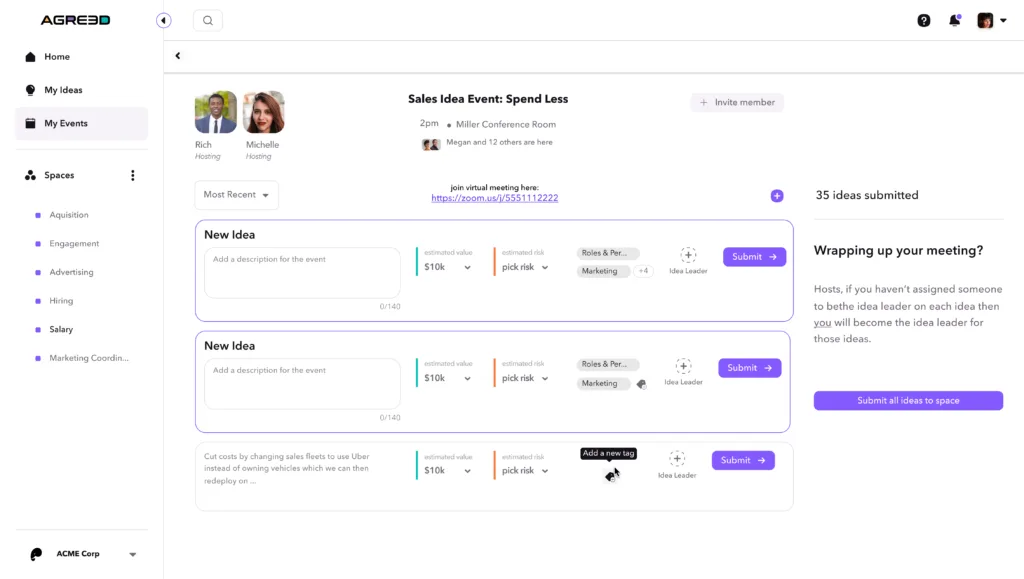
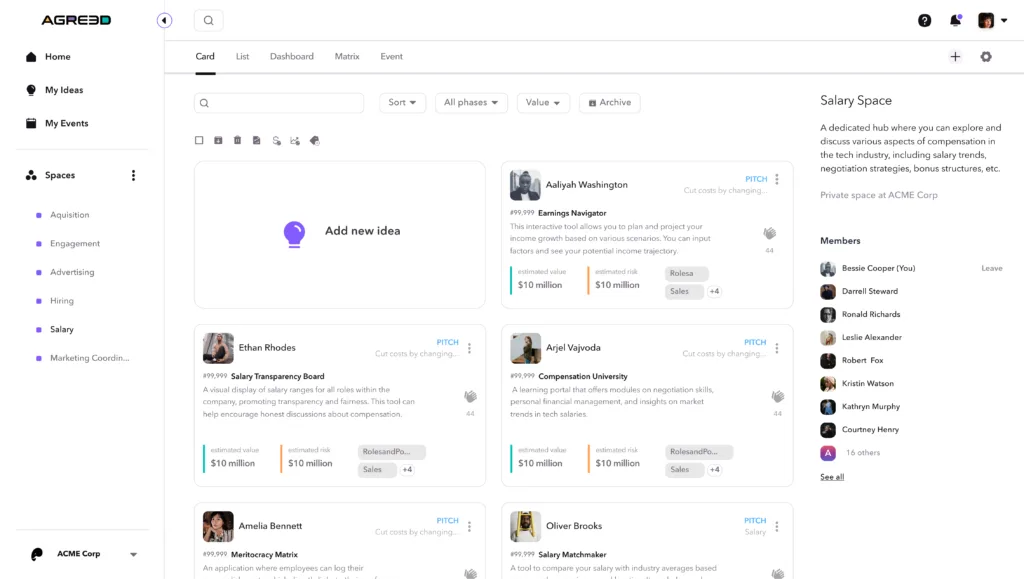
Next came the prototype, where the user experience and interface took shape. The team designed UI that people could pick up without a manual, then built wireframes to lock down the structure of each screen. Those fed into a clickable prototype, which let stakeholders click through the product and react to it well before full development began. Their feedback went straight into the high-fidelity UI designs, so the look and flow were settled before anyone committed serious engineering time to building them.
Phase 3
Implementation
Implementation is where Motomtech built the platform's software architecture, designed from the start to scale and handle future growth. The team built both the mobile and web applications and kept them in sync so the experience held together across devices. A solid DevOps setup backed it all up for security, reliability, and performance. Development ran in iterations, each one tightening the platform based on feedback as it came in. A key milestone was shipping the Minimum Viable Product, followed by later versions that added stronger capabilities.
Phase 4
Maintenance & Enhancement
The last phase covered maintenance and enhancement. Motomtech kept the platform running well and jumped on issues as they surfaced. New features rolled out against the product roadmap, expanding what the platform could do in step with what users needed. Staying in close contact with stakeholders mattered here, since their input drove the round-by-round improvements that sharpened the software over time. With Agreed live, organizations now have a structured way to make decisions, one that moves work faster and brings teams together.
Technology Stack
To ensure scalability, security, and high performance, Agreed was built using a robust tech stack, including:
Backend & Infrastructure
Ruby on Rails AWS EC2 Amazon S3 Amazon VPC Elastic Load Balancing (ELB) Amazon Route 53 AWS IAM AWS KMS Amazon GuardDuty AWS Lambda Amazon API Gateway Amazon SNS Amazon CloudWatch AWS CloudTrail AWS CodePipeline AWS CodeDeploy Amazon CloudFront GitHub Amazon RDS Postgres
Frontend & Mobile
React React Native
Testimonial
With Motomtech, we were able to significantly increase our development output in a short time. A dedicated nearshore team, recruited swiftly and pragmatically, and certified according to our preferences. It couldn't be easier.
Ryan Allanbach,
CEO, Agreed